Track credit concessions, growth momentum, household debt service and delinquency across Brazil's credit market.
In the Brazil Credit Monitor, credit concessions are measured as newly granted credit and are presented in both non-seasonally adjusted (NSA) and seasonally adjusted (SA) terms. The annual growth is calculated as the 12-month percentage change in the NSA series, while the three-month annualized growth reflects the compounded change in the SA series to an annual rate.
The household debt-service ratio in the Brazil Credit Monitor indicates the proportion of household income that is allocated to debt payments. This metric is crucial for understanding the financial burden on households and can signal potential risks in the Brazilian economy, particularly in relation to consumer spending and credit availability.
The Brazil Credit Monitor analyzes delinquency rates by comparing overdue credit across the total market, individuals, and corporates, as well as by corporate size groups. This detailed breakdown helps investors assess credit risk and the overall health of the credit market in Brazil, especially during periods of economic fluctuation.
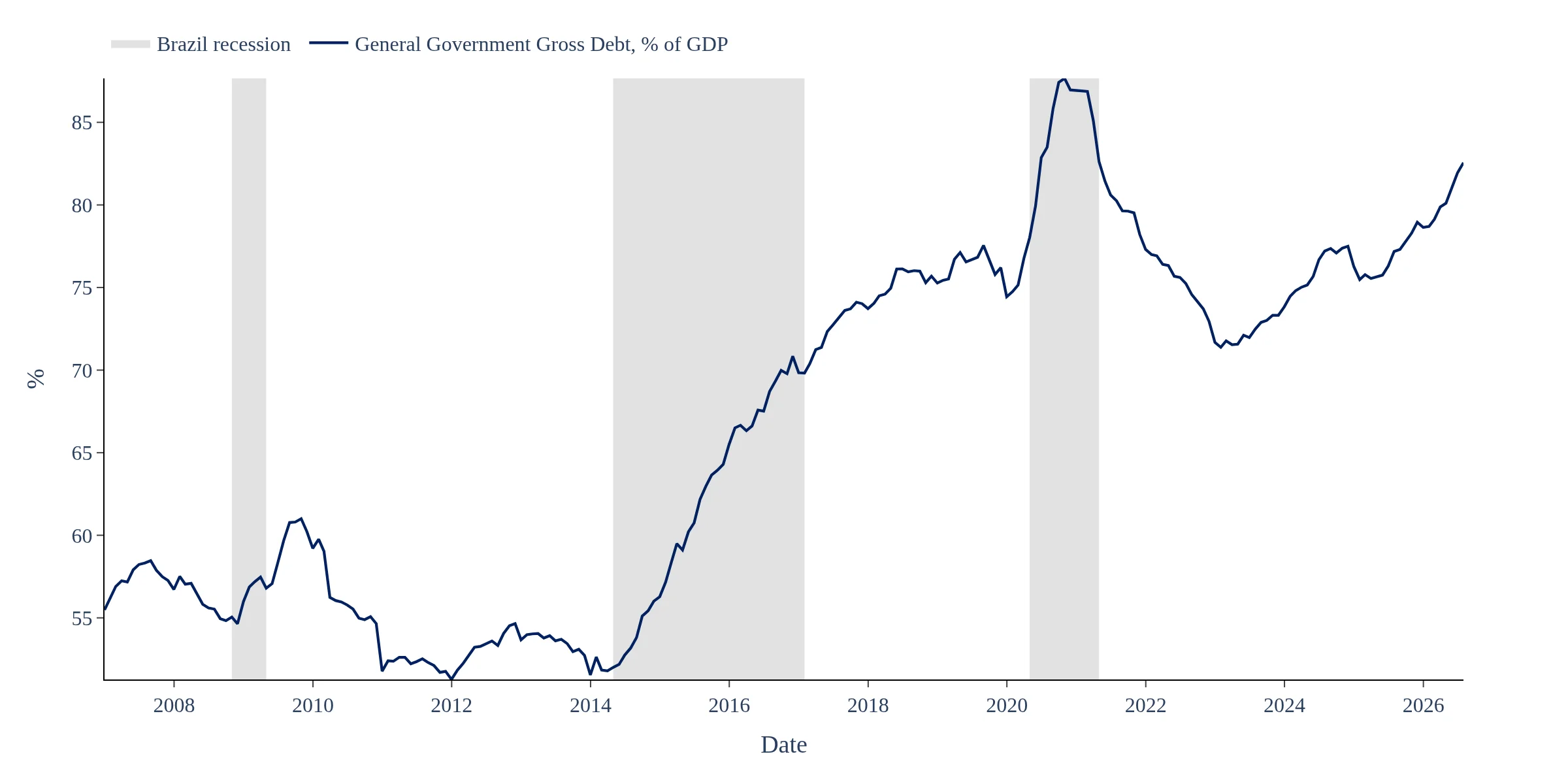
Credit concessions measure newly granted credit and are presented in both non-seasonally-adjusted and seasonally adjusted terms. Annual growth is the 12-month percentage change in the non-seasonally-adjusted series. Three-month annualized growth compounds the three-month change in the seasonally adjusted series to an annual rate. The household debt-service ratio measures the share of income committed to debt payments. Delinquency charts compare overdue credit across the total market, individuals, corporates and corporate size groups. Brazilian recession shading provides business-cycle context. Source series are retrieved from Banco Central do Brasil datasets through the Macrosights data pipeline.