Track annual growth and short-term momentum in Brazil's monthly economic activity indicator, including activity excluding agriculture.
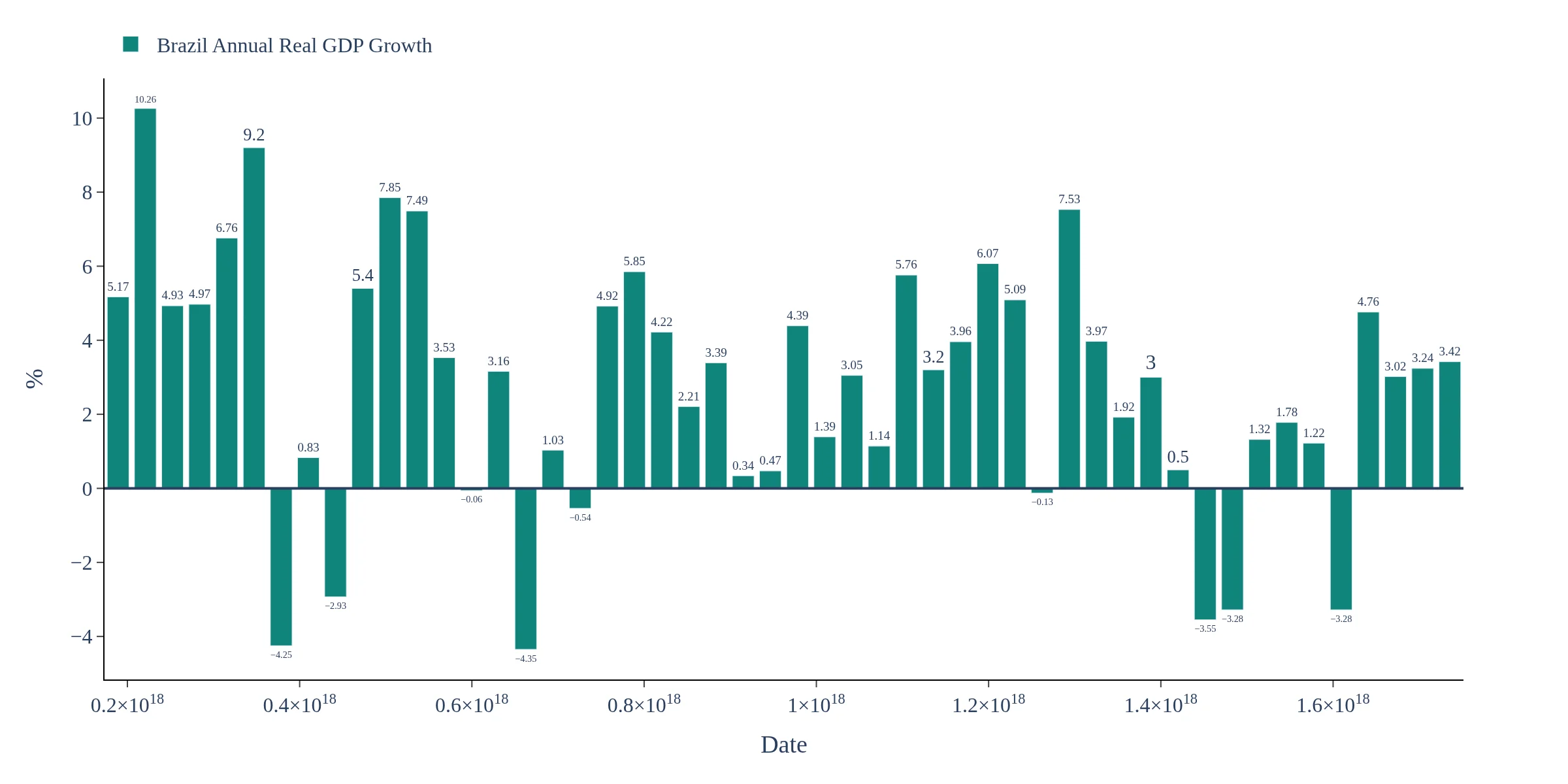
The IBC-Br is the Banco Central do Brasil's monthly index of economic activity, serving as a timely proxy for Brazilian GDP direction. It tracks annual growth and short-term momentum in economic activity, including a measure that excludes agriculture to provide a clearer view of underlying trends.
Year-over-year growth in the IBC-Br is calculated as the 12-month percentage change in the non-seasonally-adjusted index. This metric helps investors understand the annual performance of Brazil's economic activity.
The ex-agriculture measure in the IBC-Br distinguishes broader economic activity from the volatility often seen in the agricultural sector. This allows analysts and investors to gauge the underlying momentum of Brazil's economy without the influence of agricultural fluctuations.
The Brazil Monthly GDP (IBC-Br) is calculated by the Banco Central do Brasil as a monthly index of economic activity. It includes year-over-year growth as the 12-month percentage change in the non-seasonally adjusted index, and three-month annualized growth, which compounds the latest three-month change in the seasonally adjusted index to an annual rate.
The ex-agriculture measure in the IBC-Br helps to distinguish broader underlying economic activity from the volatility often seen in the agricultural sector. This metric is crucial for understanding the overall momentum of Brazil's economy without the fluctuations caused by agricultural performance.
Cumulative 12-month growth in the IBC-Br compares the latest 12-month average of the index with the preceding 12-month average, smoothing out monthly volatility. This measure provides a clearer view of the long-term economic trend and is essential for investors analyzing Brazil's economic health.
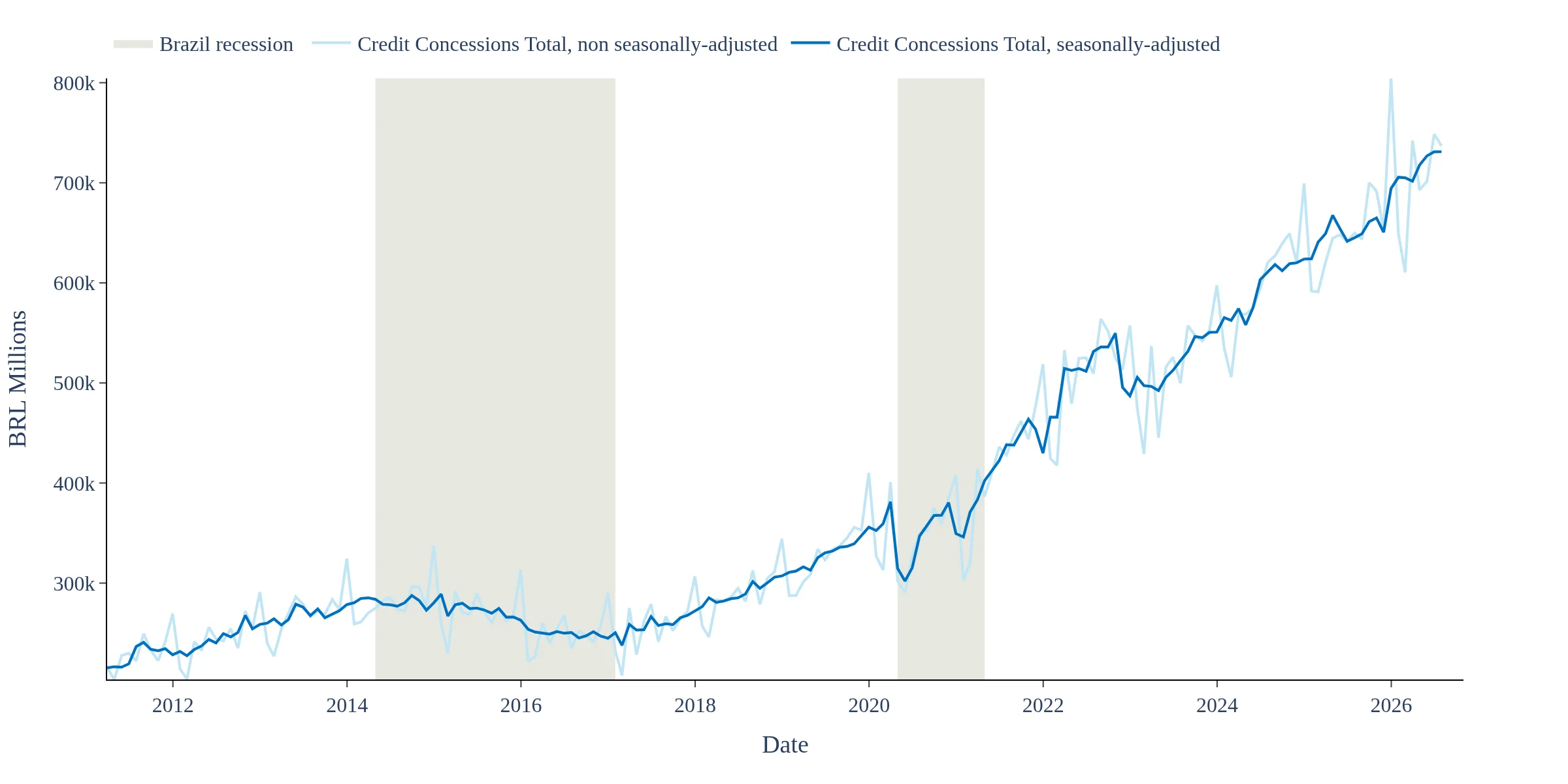
The IBC-Br is the Banco Central do Brasil's monthly index of economic activity and is commonly used as a timely proxy for the direction of Brazilian GDP. Year-over-year growth is calculated as the 12-month percentage change in the non-seasonally-adjusted index. Three-month annualized growth compounds the latest three-month change in the seasonally adjusted index to an annual rate. Cumulative 12-month growth compares the latest 12-month average of the index with the preceding 12-month average, smoothing monthly volatility. The ex-agriculture measure helps distinguish broader underlying activity from volatility in the agricultural sector. Brazilian recession shading provides business-cycle context. IBC-Br is an activity indicator and does not replace the official quarterly GDP statistics published by IBGE.