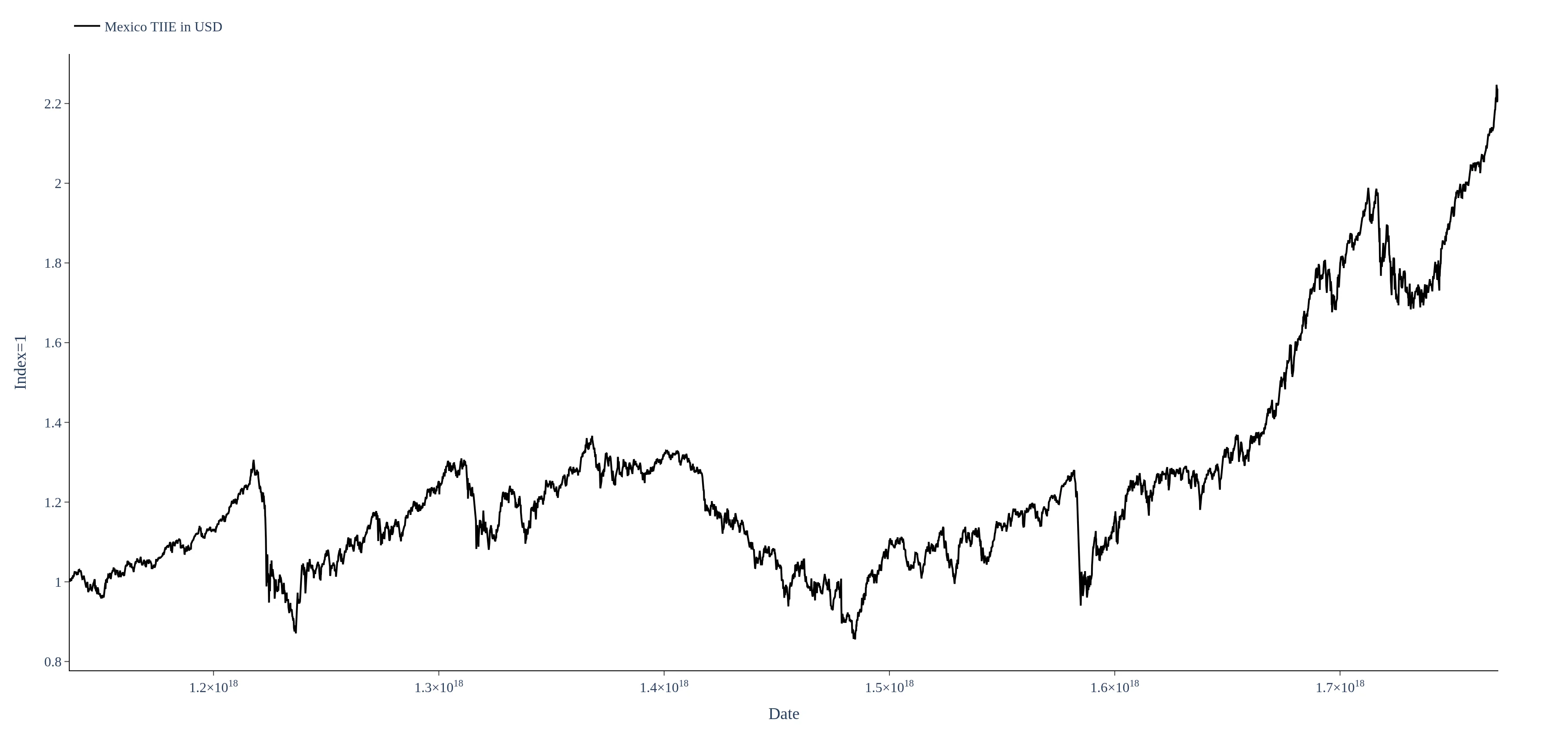
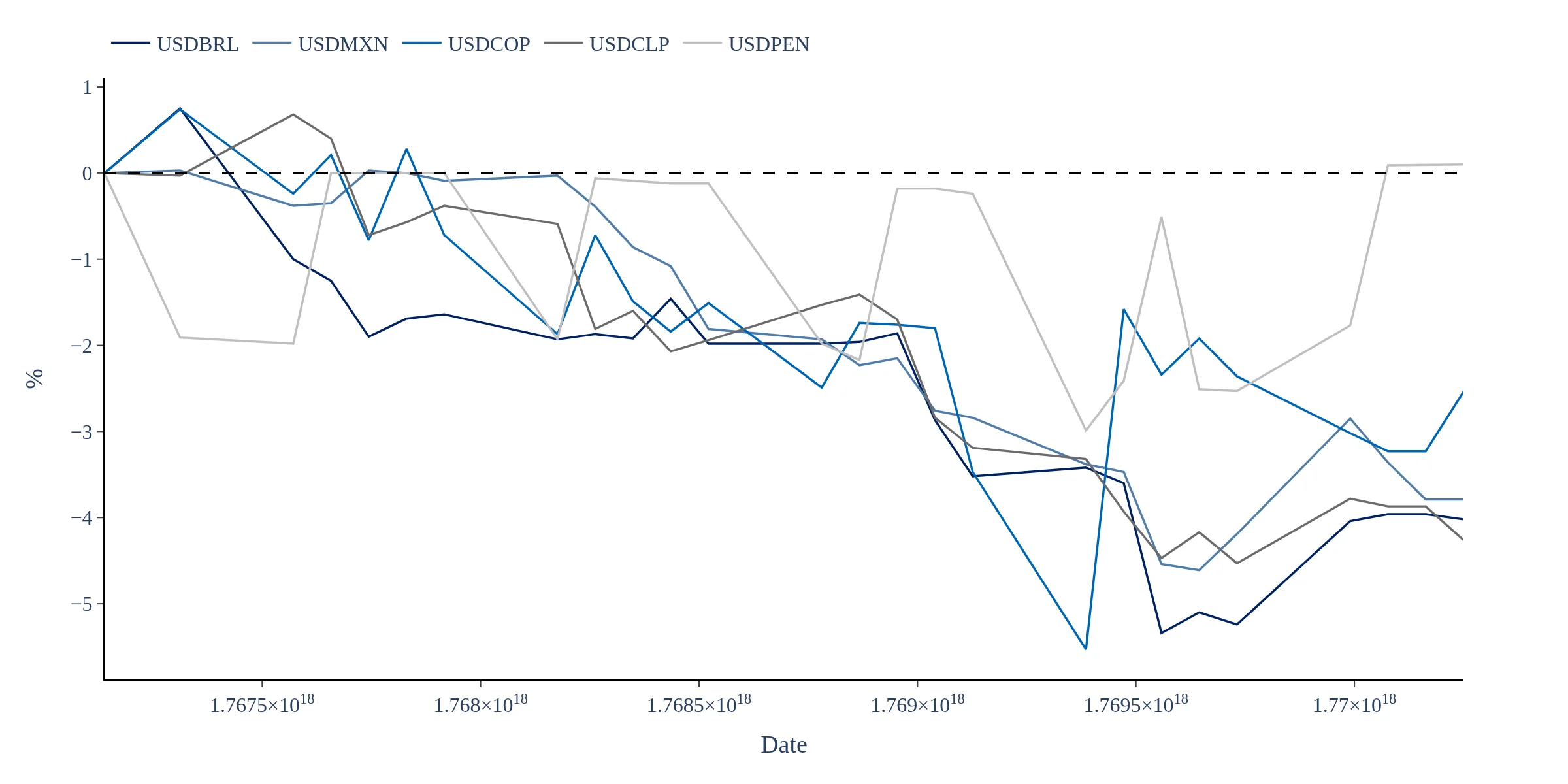
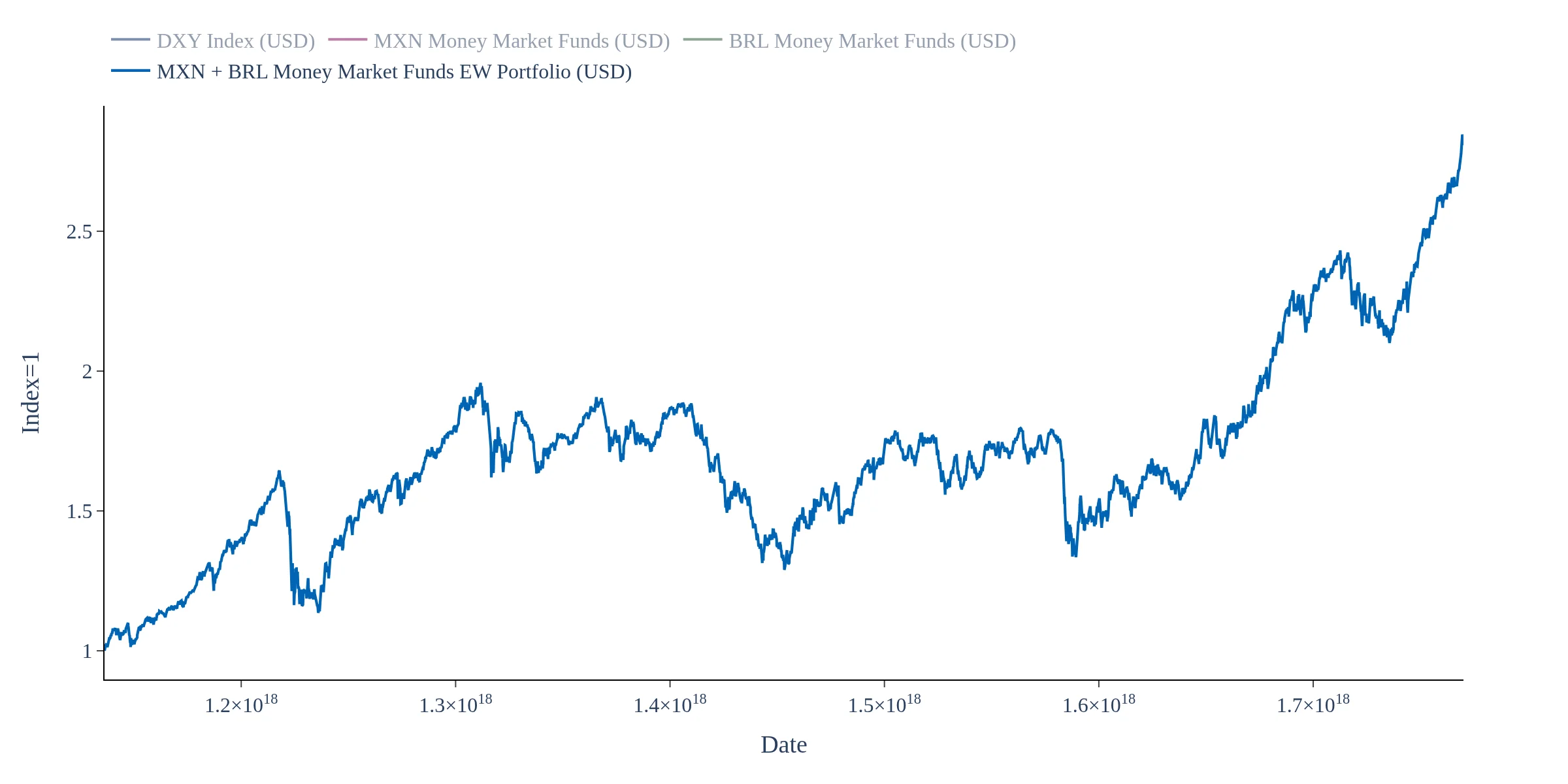
Mexico's ex-post real interest rate is calculated by subtracting the 12-month inflation rate (INPC) from the 12-month growth in the TIIE benchmark rate. This calculation provides insight into the actual real interest rates faced by investors and borrowers over the past year.
In the Mexico real interest rate dashboard, positive values indicate that the real interest rate is above zero, suggesting a favorable environment for savers and investors. Conversely, negative values imply that inflation has outpaced the nominal interest rate, which can erode purchasing power and affect investment decisions.
The Mexico ex-post real interest rate data can be used to assess the country's monetary stance, helping investors understand potential implications for interest rates, the Mexican peso (MXN), and risk assets. By analyzing historical trends and current readings, traders can make informed decisions regarding their investment strategies in the Mexican market.
This dashboard tracks Mexico’s ex-post real interest rate by subtracting 12-month inflation (INPC) from the 12-month growth in the TIIE benchmark rate. The calculation approximates the realized real policy/short-rate backdrop faced by investors and borrowers over the past year. Values above zero indicate positive real rates, while negative readings suggest inflation has exceeded the nominal rate trend. Data is updated as new Mexico interest rate and inflation releases become available and is shown with historical context to identify tightening and easing cycles. Use it to assess Mexico’s real monetary stance and implications for rates, MXN and risk assets.