Backtest of an inverse-volatility Gold and Nasdaq portfolio targeting 10% annualized volatility, hedged into Brazilian reais.
The Gold + Nasdaq Strategy targets 10% annualized volatility by weighting each asset inversely to its exponentially weighted moving average (EWMA) volatility estimate. This systematic approach ensures that the portfolio adjusts dynamically to market conditions, maintaining the desired risk profile while hedging into Brazilian reais.
The BRL hedging in the Gold + Nasdaq Strategy is achieved through a conversion of the U.S.-dollar returns into a BRL-hedged return series using the Macrosights currency-hedging methodology. This allows investors to mitigate currency risk while analyzing the performance of the portfolio against cumulative CDI.
The drawdown analysis in the Gold + Nasdaq Strategy dashboard provides insights into the maximum peak-to-trough declines of the BRL-hedged portfolio. By examining these drawdowns, investors can better understand the risk exposure and potential volatility of their investment strategy, aiding in effective portfolio management.
This dashboard backtests a systematic portfolio combining the Nasdaq index and Gold. Each asset is weighted inversely to its EWMA volatility estimate, and the combined portfolio is scaled to target 10% annualized volatility. Weights are lagged by one trading day to avoid look-ahead bias. When total exposure is below 100%, residual cash earns a U.S. T-Bill proxy return; when exposure exceeds 100%, leverage is financed at the T-Bill return plus an assumed 0.50% annual spread. The resulting U.S.-dollar strategy is converted into a BRL-hedged return series using the Macrosights currency-hedging methodology. Performance is compared with cumulative CDI, while the other charts show peak-to-trough drawdowns, monthly and annual BRL-hedged returns, and rolling 90-, 126-, 252- and 504-trading-day correlations between daily Nasdaq and Gold returns. This is a historical model backtest and does not include taxes, transaction costs, slippage, management fees, or implementation constraints beyond the stated leverage spread.
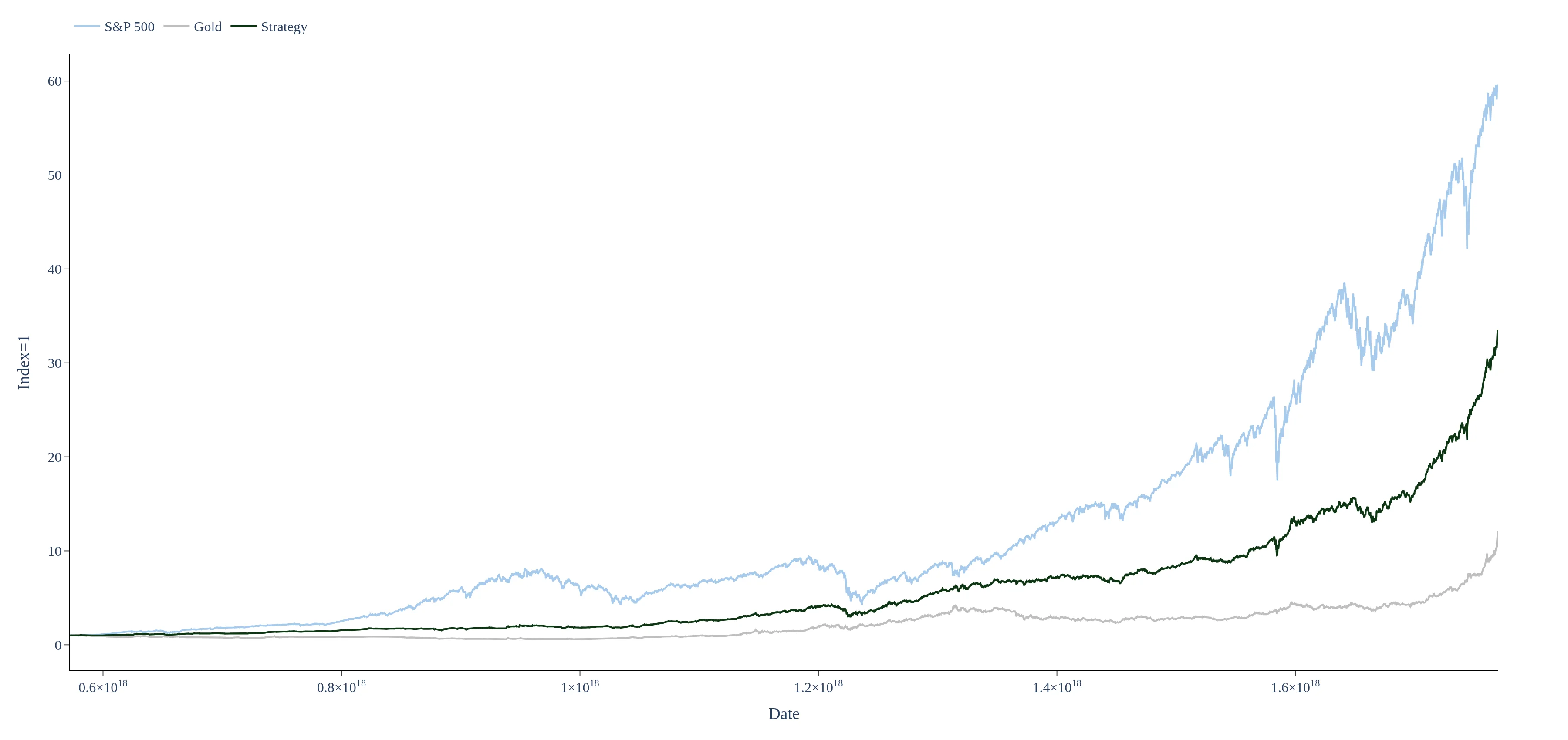
Get insights into how being long the S&P 500 and Gold on a vol adjusted basis is performing
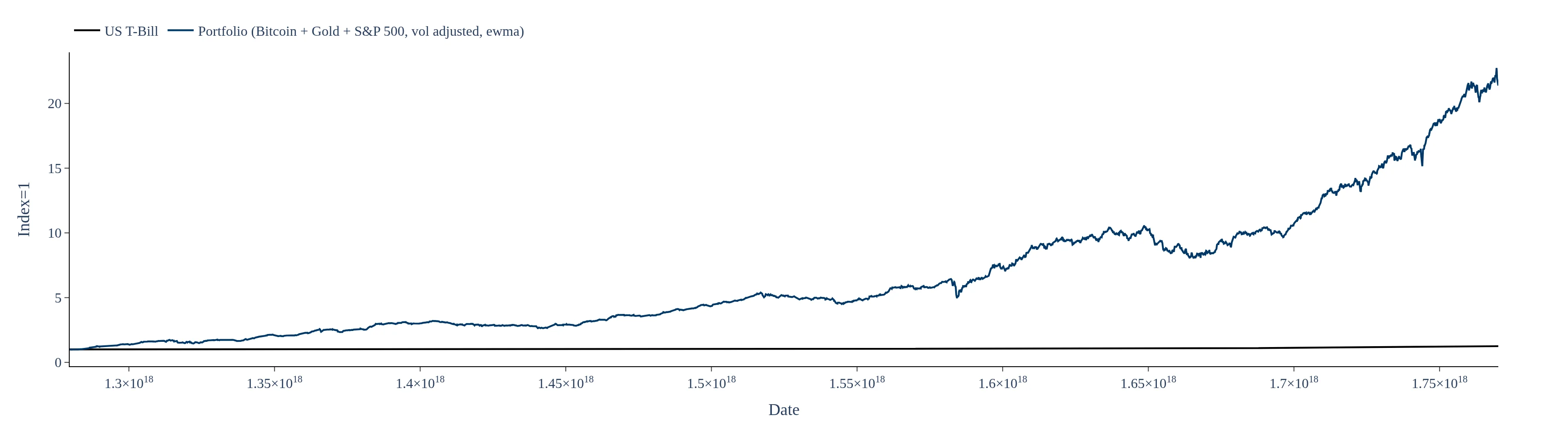
Get insights into how a volatility adjusted portfolio of Bitcoin + S&P 500 + Gold is performing
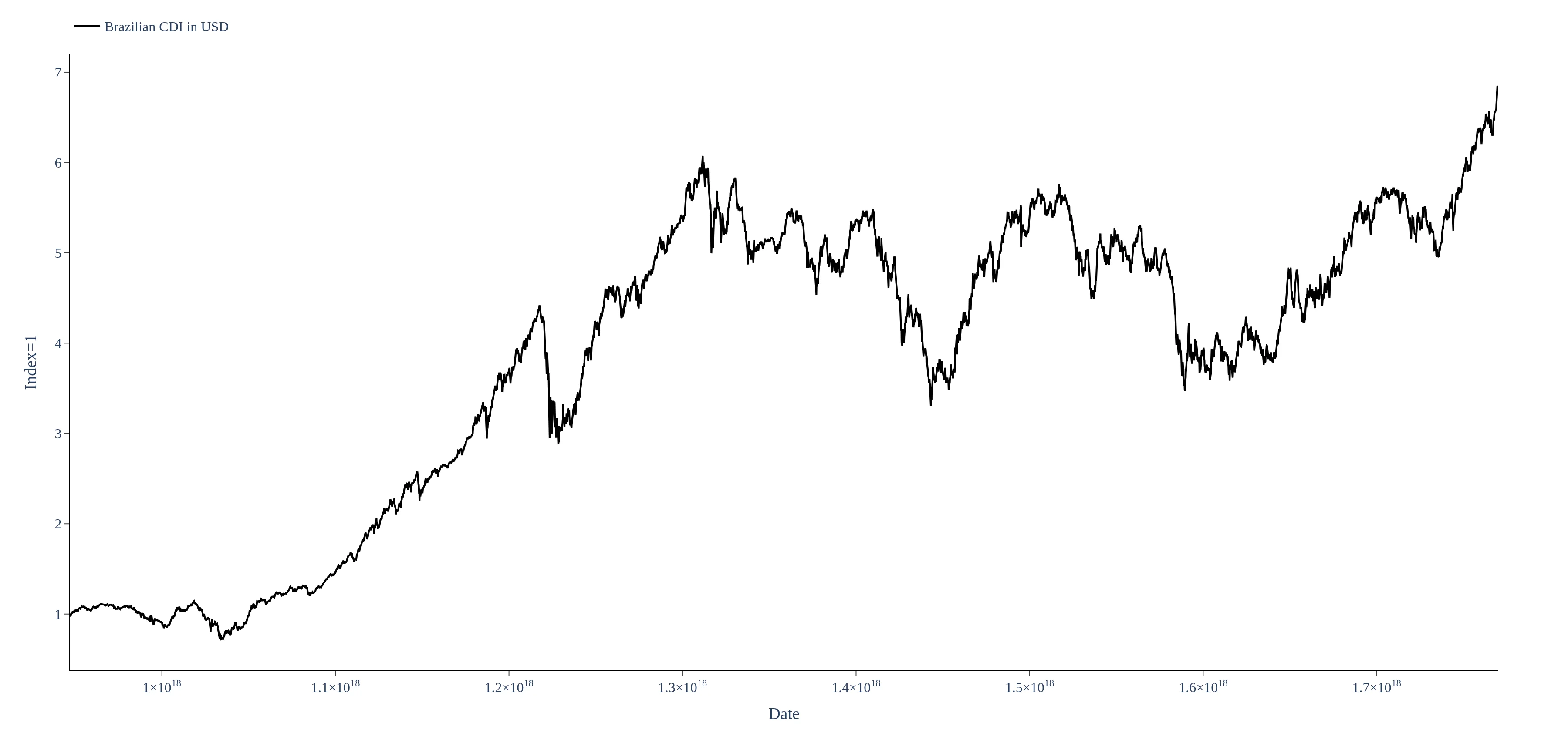
Get insights into how the Brazilian CDI index is performing in USD terms