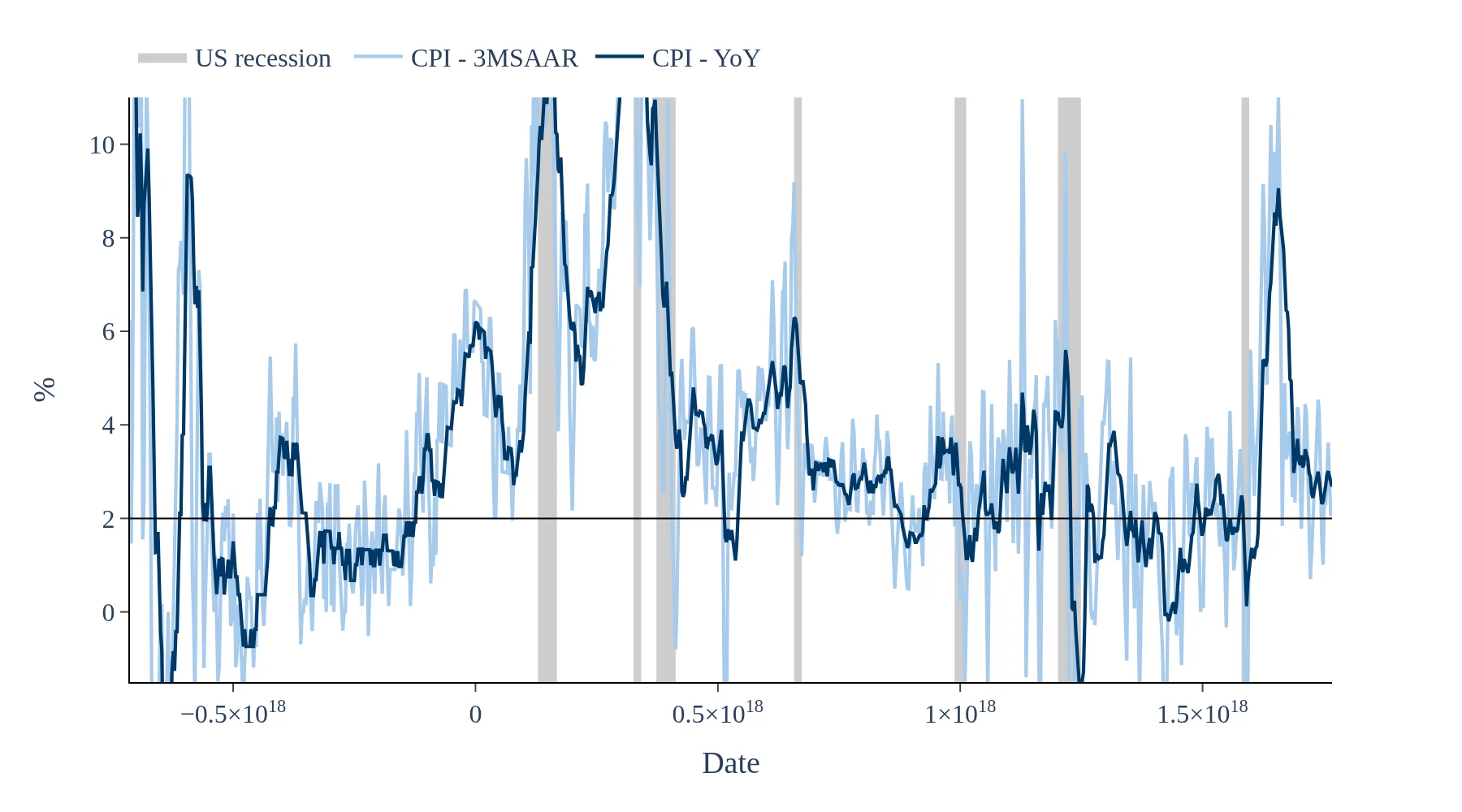
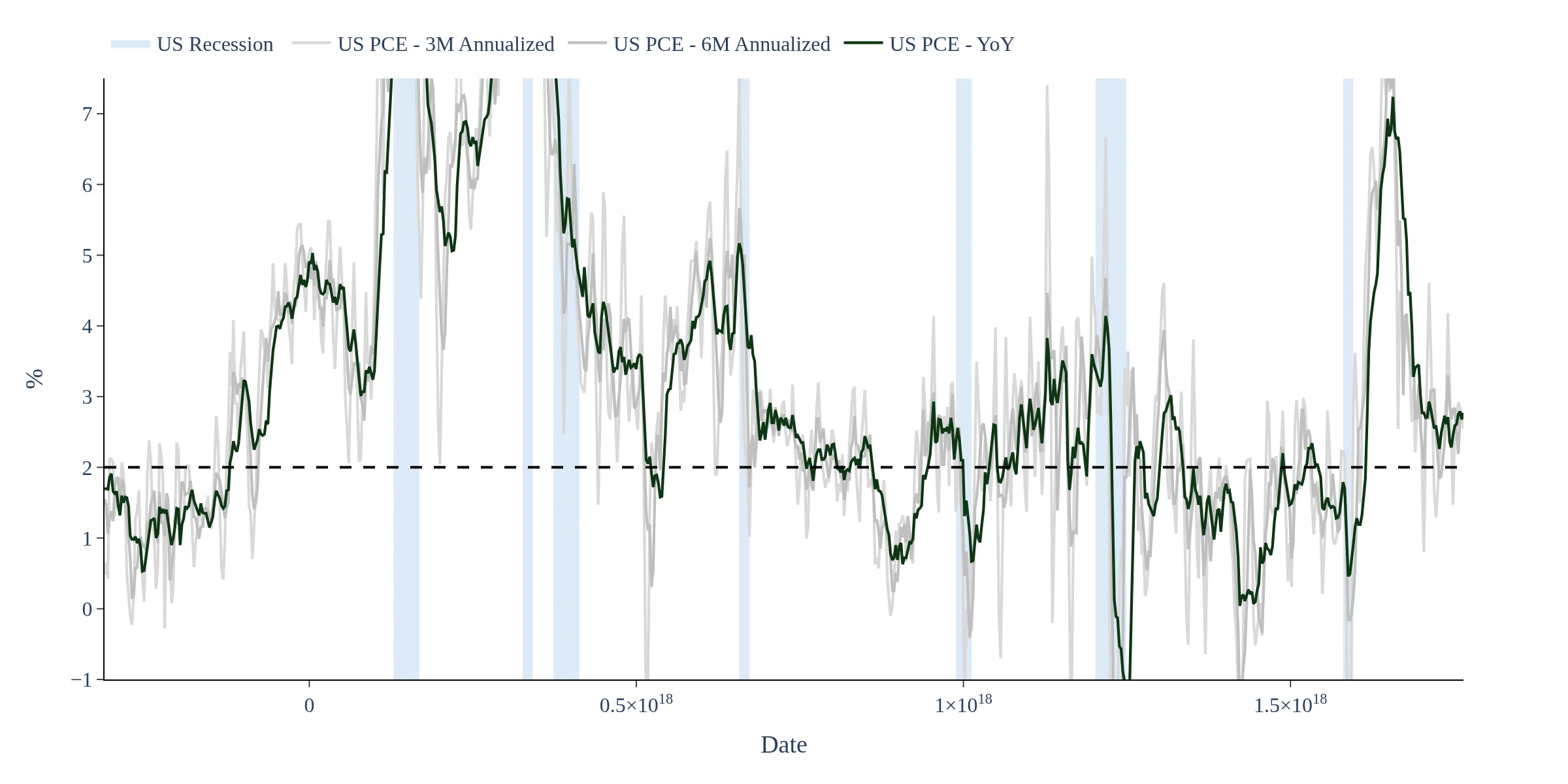
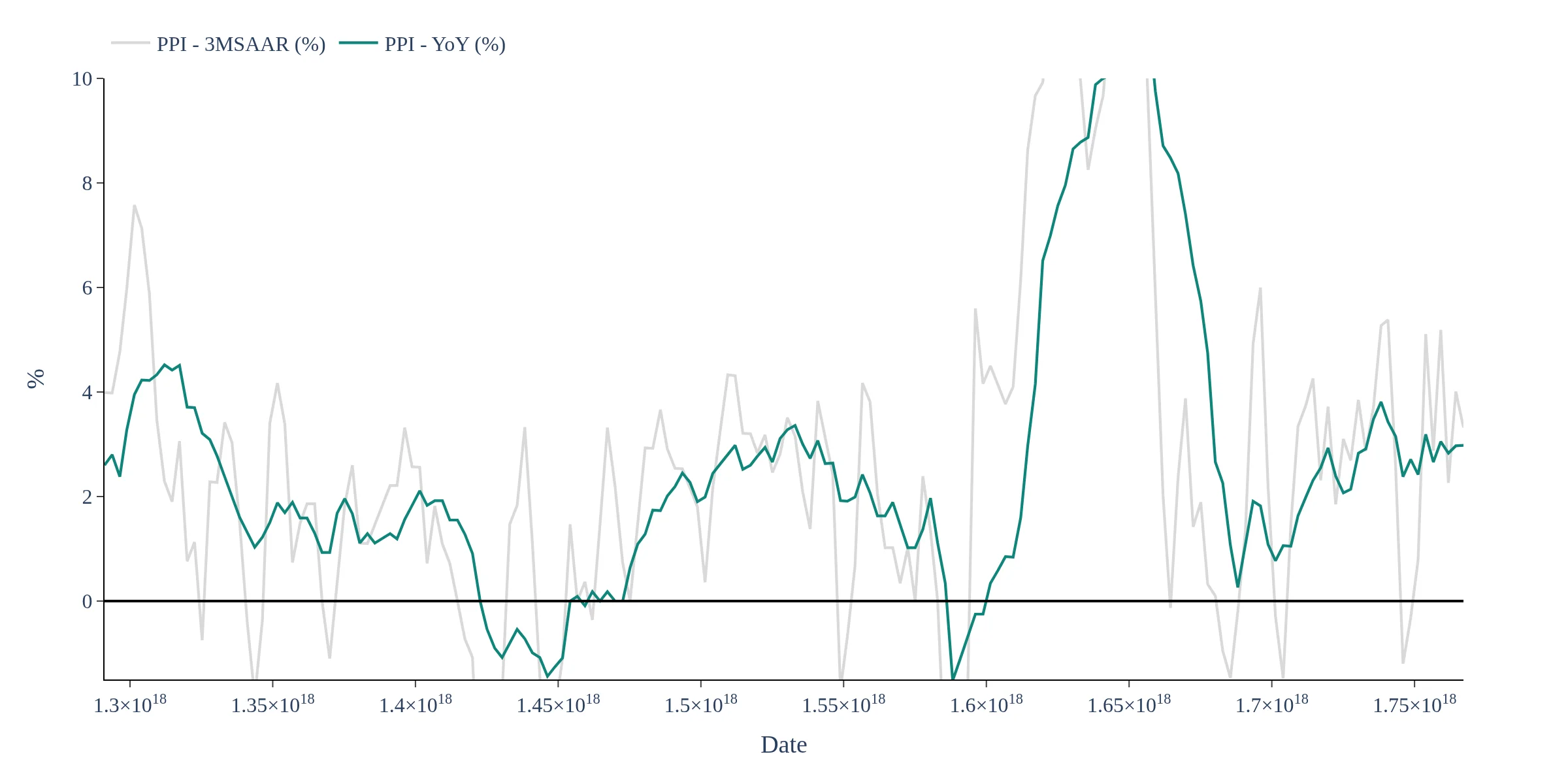
Dashboard consolidating the most relevant information on US interest rates.
The US Rates Dashboard provides visualizations of key Treasury yields, including the 2-year and 10-year rates, allowing you to assess the shape of the yield curve. By monitoring these rates, you can gain insights into monetary policy expectations and economic growth risks, particularly during different macro regimes.
The US Steepener chart shows the difference between the 10-year and 2-year yields, which helps investors understand the market's expectations for future interest rates. A steepening yield curve typically suggests rising inflation expectations or economic growth, while a flattening curve may indicate recession risks.
The US 5Y5Y Forward rate displayed on the dashboard reflects market expectations for average interest rates over the next five years, starting five years from now. This rate is crucial for assessing long-term inflation expectations and can guide investment strategies in fixed income securities.
This US Rates dashboard tracks the most important US interest rate benchmarks across the Treasury curve, including key maturities such as the 2-year and 10-year yields. The charts visualize how US government bond yields evolve over time and highlight major macro regimes, including recession periods, to put rate moves in context. Data is used to analyze monetary policy expectations, inflation dynamics, and growth risks through the shape and level of the yield curve. Use these time series to monitor shifts in front-end vs long-end rates and assess rate volatility across cycles.